How Architects Can Stop Drowning in Projects: Smarter Workload Management for the 2026 Construction Boom
Globally, the demand for housing, sustainable retrofits, and urban infrastructure has never been higher. Here in the UK, government housebuilding targets, net zero retrofit programmes, and a surging pipeline of mixed use and build to rent schemes are landing on architects' desks all at once. For practices of every size, 2026 represents both a career defining opportunity and a very real operational risk. The practices that will come out ahead are not just the most talented. They are the most organised. This guide is for architects who want to lead that change
Project management software for architects has never been more essential than it is right now.
The UK construction sector is in the middle of a significant upswing; housing targets, retrofit programmes, and major infrastructure investment are all pushing demand higher simultaneously.
For architecture practices of every size, that should be good news. More projects mean more revenue, more visibility, more growth.
But here is the reality many architects are quietly living with: the work is coming in faster than practices can comfortably absorb it.
Inboxes are full. Deadlines are colliding. Senior architects are stretched thin whilst juniors wait for direction.
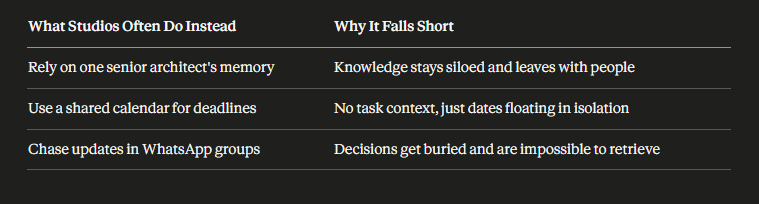
Projects are being managed across a patchwork of emails, WhatsApp threads, shared drives, and spreadsheets — none of which talk to each other.
Some practices have started making the switch to dedicated tools.
Platforms like Asana, Notion, and YoopKnows are gaining traction amongst architecture practices looking to consolidate their workflows and get a clearer picture of who is doing what, and by when.
But simply adopting a new tool without rethinking how work is managed rarely solves the underlying problem.
The result of poor workload management is not growth; it is controlled chaos.
And if left unchecked, it leads somewhere worse:burnout, fee write-offs, and a reputation for unreliability that no practice can afford.
In this article, we will walk through what smarter systems look like in practice and how the right tools can turn the 2026 construction boom into sustainable, profitable growth rather than an endurance test.
Why Architects Feel Overwhelmed in the 2026 Construction Boom
The construction boom 2026 is real and it is relentless.
More commissions sound brilliant until your team is juggling six live projects with no clear system holding it all together. Most practices feel it before they can name it.
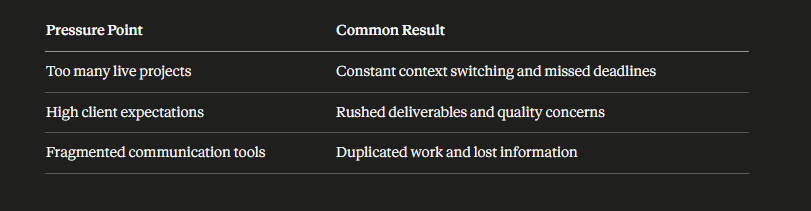
The pressure points hitting practices hardest right now:
Rising demand across all sectors — housing, retrofits, and infrastructure schemes are all landing at once, stretching practices thin.
Clients expecting more for less — faster turnarounds, sustainability compliance, and tighter fees are now standard expectations on every brief.
Old tools creating new problems — emails, WhatsApp, and spreadsheets were never built for multi-project coordination at this pace.
What "Workload Management" Really Means for Architects
Workload management is not just tracking hours on a timesheet. Every experienced architect knows the real problem is visibility.
Who is doing what?
Which project is behind?
Where is the bottleneck hiding?
What proper workload management actually covers:
Capacity planning means knowing before you say yes to a client whether your team genuinely has room to deliver.
Resource allocation ensures the right person works on the right task at the right project stage.
Live project oversight gives principals a real time view across every active job without chasing updates.
Deadline mapping connects every task to a submission date, planning milestone, or site programme in one place.
Communication tracking keeps decisions, approvals, and client instructions linked to the relevant project and stage.
5 Common Workload Pain Points in Architecture Practices
Every architect recognises these.
They start small, then quietly snowball into serious practice problems.
Here are the top 5 pain points that consistently trip up UK architecture practices:
Too many live projects with no clear priorities means your team spends more time context switching than actually delivering quality work.
Overloaded senior architects becoming bottlenecks whilst juniors sit idle waiting for instructions, reviews, or simple sign offs.
Deadlines scattered across calendars and inboxes making last minute planning application scrambles almost completely inevitable every single time.
Disconnected remote and on site teams working from different drawing versions, creating costly and embarrassing coordination errors on site.
Billable time quietly disappearing into admin through chasing updates, hunting files, and re-explaining decisions already made weeks ago.
Smarter Workload Management Principles Architects Can Apply Today
The good news?
You do not need a complete studio overhaul.
Small, deliberate changes to how work is organised make an enormous difference almost immediately.
5 principles that genuinely work in busy UK architecture practices:
Centralise everything into one source of truth so every team member finds tasks, files, and decisions in one place without asking around.
Plan capacity before accepting new commissions by mapping team availability against current project stages before confidently saying yes to clients.
Standardise workflows using project templates built around RIBA stages so nothing important gets missed from concept through to handover.
Make progress visible to the whole team through shared dashboards replacing those draining weekly status meetings nobody particularly enjoys attending.
Automate routine admin reminders for submission deadlines, RFI responses, and consultant chases so nothing slips through unnoticed.
Where YoopKnows Fits In
If the 5 pain points above sound familiar, YoopKnows was built for exactly that reality. It is not a generic task manager dressed up for architects. It is a workspace that understands how architecture practices actually run.
Here is how it maps directly to what busy practices need:
One central workspace replaces your scattered tools so projects, tasks, files and conversations all live together and nothing gets lost across inboxes.
Dedicated project and task dashboards give principals a live overview of every job, every milestone, and every outstanding action without chasing anyone.
Create projects and track every team member in real time so you always know who is working on what stage and what is coming next.
Visual workload planning shows instantly who is overloaded, who has capacity, and where resource decisions need to be made before problems develop.
RIBA aligned templates and checklists ensure every project follows consistent approval steps and stage deliverables from initial concept right through to handover.
Lightweight automation handles routine admin so deadline reminders, RFI chases, and update requests run themselves whilst your team focuses on design.
Practical Steps to Get Started With Smarter Workload Management
Small, honest steps beat a big complicated overhaul every single time.
Here is a straightforward path that actually works.
Follow these four steps to get your studio running more smoothly:
Step 1: Audit your current chaos by listing every tool your team uses and identifying your top three biggest workflow bottlenecks honestly.
Step 2: Pilot one live project on YoopKnows first, moving its tasks, deadlines, and files across before rolling anything out studio wide.
Step 3: Set clear workload rules deciding how tasks are created, assigned, and updated so everyone works from the same consistent system.
Step 4: Hold a monthly studio review where you look at workload spread, who is overloaded, what slipped, and what your templates need to improve.
Conclusion
The construction boom 2026 is a genuine opportunity for UK architecture practices. But opportunity without organisation is just pressure with a better name.
Here is what smarter workload management gives your practice:
Control over live projects so nothing slips, nobody is blindsided, and every deadline is visible well in advance.
Balanced workloads across your team protecting senior architects from burnout whilst giving juniors clear direction and real ownership.
More billable time recovered from the hours currently lost to admin, chasing, and unnecessary back and forth communication.
A healthier, more profitable studio that can take on the boom confidently without sacrificing quality, culture, or client relationships.
The practices that will thrive in this cycle are not necessarily the biggest. They are the ones running the tightest, clearest, most organised practices.
YoopKnows exists to help you become exactly that practice.
Ready to stop drowning and start leading? Give YoopKnows a try today.